

Advances in genomic technologies and their applications to detect and characterize infectious diseases of significance to public health provide great opportunities to improve surveillance and response efforts. Key challenges to the expansion of advanced molecular detection methods within public health laboratories and health departments include workforce training; development of standardized protocols for wet lab and bioinformatics; and data infrastructure to store, merge, analyze, and protect patient-linked sequencing data.
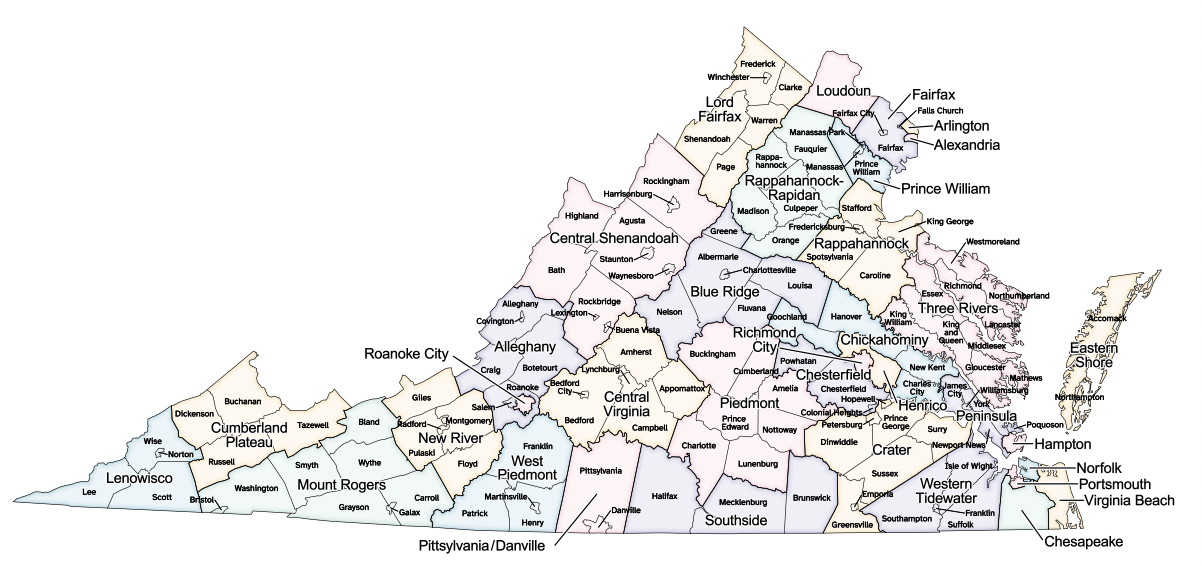
The Department of General Services (DGS) Division of Consolidated Laboratory Services (DCLS) and partners at the Virginia Department of Health (VDH), University of Virginia (UVA) School of Medicine (SOM) and Biocomplexity Institute (BI), and Virginia Commonwealth University (VCU) are working together as the Virginia Pathogen Genomics Center of Excellence (VA PGCoE) to further advance the utilization of genomic technologies in public health.
Current Activities and Development

“Exploring Microreact – A Guided Exercise for Surveillance and Investigation" - webinar series
February 26, 2026
This three-part video series for epidemiologists and laboratorians presents a table-top demonstration of the Microreact software and instructional questions for understanding public health surveillance and investigation. This case study uses publicly available sequencing data for examining genomic surveillance of Klebsiella pneumoniae isolates at the country or regional level (Part 1). Part 2 addresses how genomic information from sequenced isolates can be applied to enhance outbreak investigation at a local or facility level. Part 3 combines genomic epidemiology data interpretation, in both the surveillance and outbreak investigation contexts, for determining public health actions.
Wastewater Surveillance: A New Frontier in Proactive Antimicrobial Resistance Monitoring
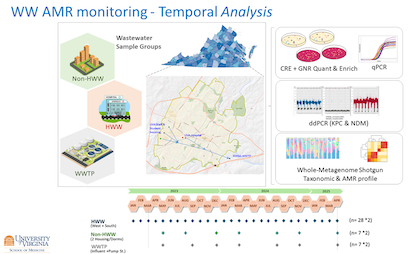
At the University of Virginia School of Medicine, we are turning wastewater into a powerful early-warning system for antimicrobial resistance. By combining advanced molecular tools, metagenomic sequencing, and rigorous validation, we can detect high-risk drug-resistant pathogens directly from complex wastewater environments—often before they are widely recognized in clinical settings. Our work demonstrates that wastewater surveillance is not just environmental monitoring, but a proactive, scalable strategy for protecting communities. If you are interested in public health, genomics, or data-driven solutions to emerging threats, this field offers a unique opportunity to make meaningful impact at the population level.

